
CDD Fees in Tampa Bay: What They Are and How to Check Before You Buy
Two homes in Tampa Bay can be listed at the same price and cost very different amounts to own. One of the common reasons is a CDD.
What is a CDD?
A Community Development District is a special district, which is a unit of local government created for one job rather than for general government. Florida has thousands of them: fire districts, mosquito control districts, water management districts, and these. A CDD's job is the infrastructure of a single community.
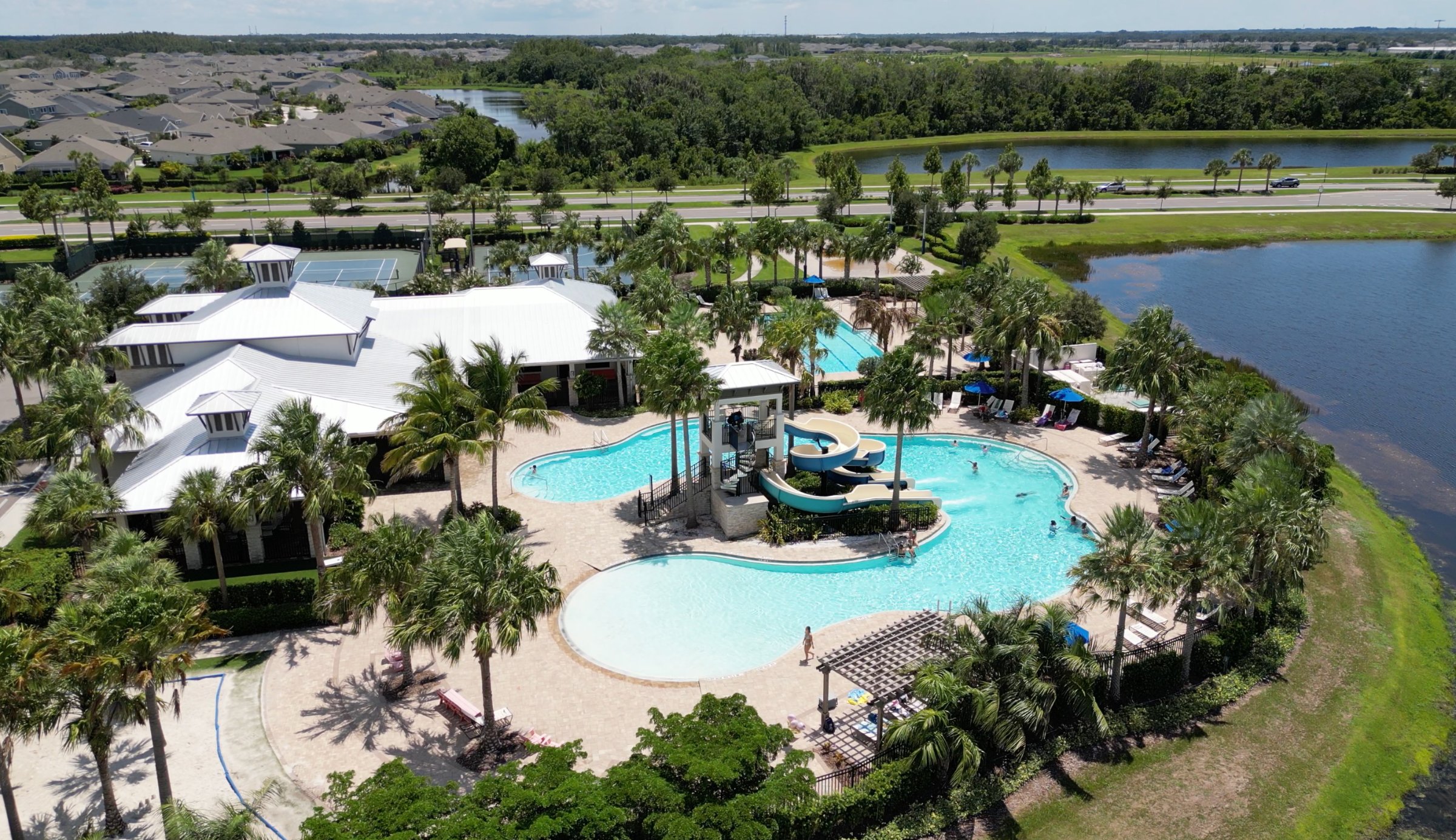
When a developer builds a large community, the district borrows money by issuing bonds and uses it to build the roads, water and sewer lines, stormwater ponds, sidewalks, street lighting, and often the amenity center, pool, and trails. The homeowners then repay that borrowing, through assessments collected on the annual property tax bill. It's created under chapter 190, Florida Statutes.
It's a financing arrangement, and it's why so many newer master-planned communities in Pasco, eastern Hillsborough, and Manatee have one. It let the developer build the amenities up front rather than pricing them into each home.
The two halves of a CDD assessment
Your bill has two pieces, and they behave differently.
The debt assessment repays the bonds. It's a fixed amount per lot, it runs for the life of the bonds, typically 20 to 30 years from when they were issued, and it ends when they're paid off. Many districts let an owner pay off their share early, in a lump sum.
The operations and maintenance assessment pays to run and maintain what the district owns: landscaping the common areas, maintaining the ponds and streetlights, staffing and repairing the amenity center. The district's board sets it each year, and it doesn't end.
So the question "how long do I pay a CDD fee?" has two answers. The debt part has an end date you can look up. The operations part continues for as long as you own the home.
What it costs, and where it shows up
Across Tampa Bay's newer communities, a combined CDD assessment of roughly $1,500 to $3,000 a year is common, and some run higher. That's $125 to $250 a month, and it lands on top of the mortgage, property taxes, homeowners insurance, and any HOA dues.
It appears on your November property tax bill as a non-ad valorem assessment, listed separately from the taxes based on your home's value. If you escrow, your lender collects it monthly along with your taxes and insurance, which is why the escrow payment on a CDD home is higher than on a comparable home without one.
That difference is worth running before you fall for a floor plan. Our guide to how much house you can afford and the calculator under it let you put the CDD in with everything else.
Where the disclosure comes from
Florida requires the disclosure once, in writing, on the first sale of a home in the district. Section 190.048 says each contract for the initial sale must carry this notice in bold type, right above the buyer's signature:
THE (Name of District) COMMUNITY DEVELOPMENT DISTRICT MAY IMPOSE AND LEVY TAXES OR ASSESSMENTS, OR BOTH TAXES AND ASSESSMENTS, ON THIS PROPERTY. THESE TAXES AND ASSESSMENTS PAY THE CONSTRUCTION, OPERATION, AND MAINTENANCE COSTS OF CERTAIN PUBLIC FACILITIES AND SERVICES OF THE DISTRICT AND ARE SET ANNUALLY BY THE GOVERNING BOARD OF THE DISTRICT.
On a resale, that statute doesn't apply, and in practice you'll still see it: the listing shows the community's CDD and its annual amount, the seller's property disclosure covers assessments, and the contract addresses them. What you shouldn't do is treat the listing as the final word. A listing figure can be last year's, or it can show only the operations half and leave out the debt. The tax bill is the authority.
A CDD is public. An HOA is not.
This is the thing buyers mix up most, and it's useful the moment you want real numbers.
A CDD is a government. Its meetings are public, its records are public, and section 189.069 requires it to run a website carrying its budget, its audits, its assessment rates, its meeting agendas, and its contacts. No login. Search the community's name plus "CDD" and you'll land on it.
An HOA is a private association. Its documents come to you through the sale: Florida requires the buyer to get a disclosure summary before signing the contract, and if it arrives late you can void within three days of receiving it, or before closing, whichever comes first (section 720.401). Condominiums have their own version of that right.
So: for CDD numbers, go straight to the district. For HOA rules and finances, ask your agent to get the documents early, because there's a clock on your right to walk.
How to check any address before you write an offer
Three ways, and they take about fifteen minutes:
Pull the property tax bill. Your county tax collector's site shows the current bill by address, with non-ad valorem assessments listed by name. A line naming a community development district is your answer, and the amount is right there. This is the number to trust.
Find the district's website. The budget shows the split between debt and operations, and the district manager will give you the remaining term on the bonds and any payoff amount.
Check the state's list. Florida's Official List of Special Districts confirms a district exists and gives its contact information.
Ask us and we'll do this for any address you're considering.
Is a CDD worth it?
Andrew put the short version on video. It runs a little over a minute.
Read video transcript
CDD fees are basically how the developer pays for all the nice things in a community when it's originally being built. Instead of coming out of pocket with 10 or 20 or 30 million in order to build the community out, they basically take a loan that the residents are gonna pay back over time.
There are two pieces to it. Part of the fee pays off the original construction loan. That portion eventually goes away after 20 or 30 years. The other part is ongoing maintenance, and that part stays with the property indefinitely.
Here's the real way to look at it. You're usually getting a nicer property in a better maintained community, and a bigger house for the money. The trade-off is the extra few hundred dollars a month on your tax bill. So if you don't use the community amenities, it's not worth anything to you.
In order to find these CDD fees, go to your property tax bill through the county website and scroll down. Your ad valorem taxes are your regular property tax, and then the non-ad valorem taxes, that's your CDD fee, and that's the total bill every year.
The bottom line is it's just a different way to pay for nice amenities. It's for some people and not others. You just want to know exactly what it is before you make an offer.
The gist, if you'd rather read it: a CDD is how a developer passes the cost of the community's infrastructure, the roads, sidewalks, parks, and amenities, on to the people who live there. It isn't cheap, and it can add a few hundred dollars to a monthly payment. What you get for it is a community that's designed and maintained to a standard a smaller neighborhood can't hold, with resort-style amenities inside your own subdivision. For some buyers that lifestyle is worth every dollar. For others it's a hard pass. It depends on what you're looking for.
Two questions settle it for most buyers:
Will you use what it pays for? A family in the pool every weekend gets value from it. A buyer who never uses the amenities is financing someone else's.
How does the total monthly cost compare to a similar home without a CDD? Sometimes the CDD home still wins on payment, because the base price is lower. Sometimes it doesn't. The comparison is the point, not the label.
When you sell, it works in reverse
A buyer looking at your home will run the same numbers. Two identical homes at the same price are different products when one carries a $200 monthly assessment, so the price has to account for it. Our guide to pricing from recent sales covers how to compare a CDD home with one that has no district.
Talk it through with us
Send us an address and we'll tell you whether it's in a district, what the current assessment is, how much of it is debt, and roughly when that part ends. Get in touch and we'll pull it for you.
How Much House Can I Afford?
See a comfortable price vs. your lender's maximum, with Tampa Bay insurance and flood costs built in.
Open the calculator on its own pageFAQs
What is a CDD fee?
It's an assessment collected on your property tax bill to repay the bonds that built your community's infrastructure and to maintain what those bonds paid for. The district is a unit of local government created under chapter 190, Florida Statutes.
How long do CDD fees last?
The debt portion runs for the life of the bonds, typically 20 to 30 years from when they were issued, and ends when they're repaid. The operations and maintenance portion continues for as long as the district maintains the community, and the board sets it each year.
Can I pay off my CDD?
Many districts allow an owner to pay off their share of the bond debt in a lump sum, which removes the debt portion of the assessment. The operations portion remains. Ask the district manager for a payoff figure.
Do sellers have to disclose a CDD?
Florida requires the written disclosure on the first sale of a home in the district (section 190.048). On a resale you'll normally see it anyway, through the listing, the seller's disclosure, and the contract. Confirm the amount on the property tax bill rather than relying on the listing, which can be a year behind or show only part of the assessment.
How do I find out if a house has a CDD?
Check the property tax bill on your county tax collector's site for a non-ad valorem line naming a district, look at the property appraiser's parcel record, or search the community's name plus "CDD" for the district's own site. We're happy to check an address for you.
Do CDD fees go up?
The operations and maintenance portion can, since the board sets it each year with the district's budget. The debt portion is fixed until the bonds are paid off.