
Florida Homestead Exemption and Save Our Homes: How to File
Two separate benefits come with making a Florida home your permanent residence. One cuts your taxable value this year. The other limits how much it can rise every year after. Both start with one form, filed with your county property appraiser.
What the exemption takes off your bill
The homestead exemption removes up to $50,000 from the assessed value of your permanent residence, in two parts (section 196.031, Florida Statutes):
- The first $25,000 comes off for all property taxes, including school district taxes.
- An additional amount, up to $25,000, applies to assessed value above $50,000, and only to non-school taxes. This second piece is adjusted every January 1 for inflation, when the Consumer Price Index rises.
So a home assessed at $350,000 is taxed on roughly $300,000 for most line items on the bill, and on $325,000 for the school portion. What that saves in dollars depends on your county and city millage rates, which is why two homes with the same exemption save different amounts.
Save Our Homes is the part that compounds
The exemption is a one-time subtraction. The cap is what protects you over the years you own the home.
Once your homestead exemption is in place, your assessed value can rise by no more than 3% a year, or the change in the Consumer Price Index, whichever is lower (section 193.155, Florida Statutes). Market value can climb faster. Your assessed value cannot.
After a decade in the same home, the gap between what the home is worth and what you're taxed on can be substantial, and it's the reason a long-time owner's tax bill can be a fraction of a new neighbor's on an identical house.
Who qualifies, and by when
Three things have to be true:
- You own the home as of January 1 of the tax year.
- You live in it as your permanent residence on January 1, or a dependent does.
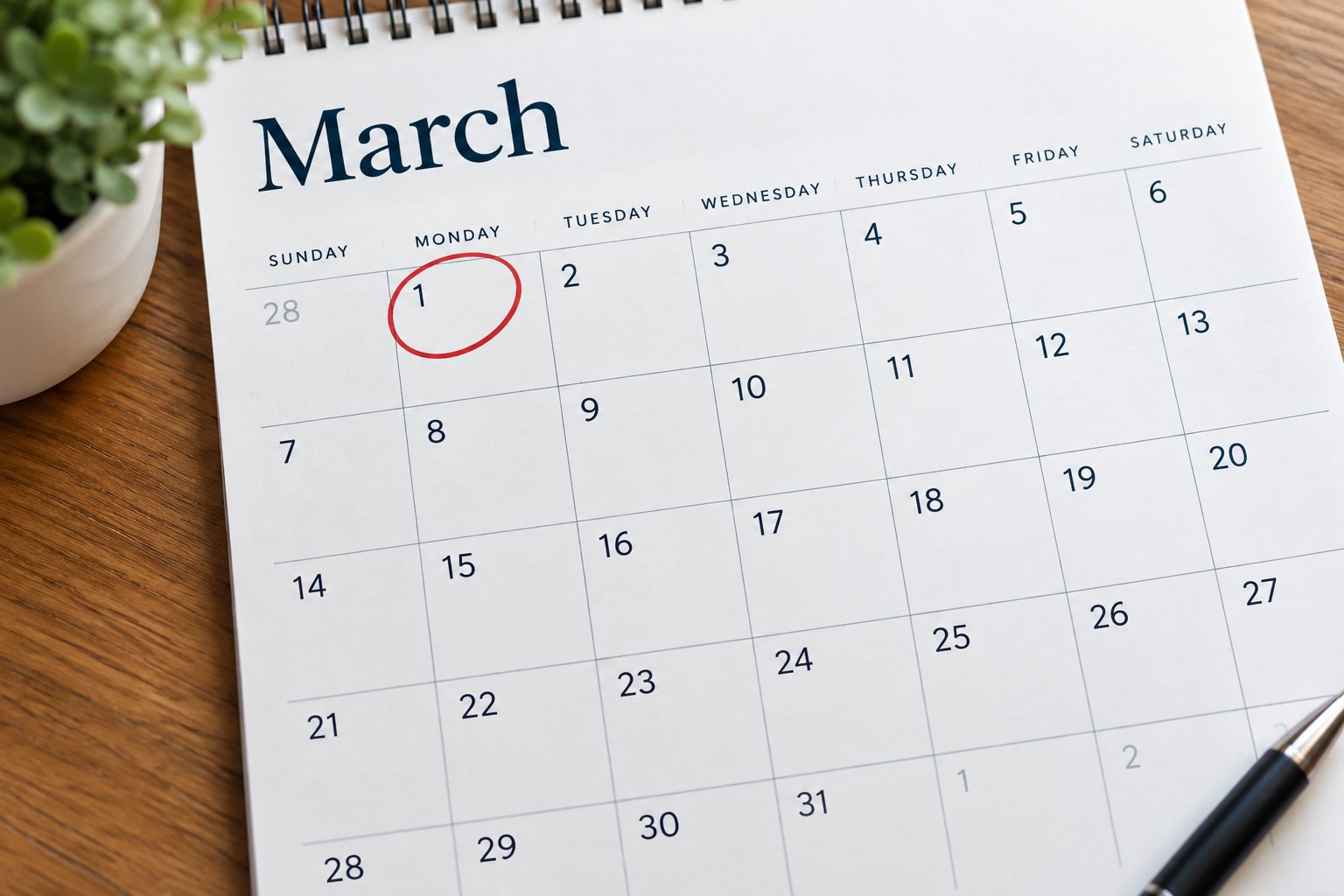
- You file by March 1 with your county property appraiser, on Form DR-501.
The January 1 date is the one people miss. If you close in February, you file the following year, and your first year is taxed without the exemption.
Your property appraiser may ask for proof of residency: a Florida driver license, a Florida vehicle registration, voter registration, a declaration of domicile, a utility bill at the address, or the address on your last tax return. Claiming residency in another state, or a homestead in another county, disqualifies you.
Renting the home out ends the exemption too. Our sister company Tampa Bay Rentals covers the rent-or-sell decision, including what the tax bill looks like afterward.
How to file in Tampa Bay
Every county takes the application online, and all four make it straightforward:
- Hillsborough County Property Appraiser
- Pinellas County Property Appraiser
- Pasco County Property Appraiser
- Manatee County Property Appraiser
You only need to file once. The exemption renews automatically each year as long as nothing changes, and your appraiser mails a receipt confirming it.
Portability: taking your savings with you
If you've owned a homesteaded Florida home for years, your Save Our Homes savings are worth real money, and selling doesn't have to throw them away.
Portability lets you move that benefit to your next Florida homestead, up to $500,000 of the difference between your old home's market value and its assessed value. You have three years from the year of your last homestead to establish the new one, and you apply with Form DR-501T along with the homestead application on the new home.
Work out your number before you shop, rather than after you move in. Whatever you carry over comes off the assessed value of your next home, which lowers that home's tax bill for as long as you own it, and the tax bill is part of the monthly payment you're budgeting against. It also isn't automatic: you claim it on Form DR-501T along with the homestead application on the new home, and skipping that form means losing it.
Why your first tax bill is higher than the seller's
The cap belongs to the owner, not the house. When a home sells, the assessed value resets to market value on the January 1 after the sale, and the new owner starts a new cap.
That's why the taxes a seller has been paying are a poor guide to what you will pay. A CDD assessment rides on the same bill and does not change hands either, which our guide to CDD fees explains. Budget from the purchase price and your county's rates, not from the listing's tax line. Our guide to how much house you can afford walks through the whole monthly payment, including taxes and insurance.
Other exemptions worth asking about
Florida has several more, and your property appraiser's site lists what your county offers:
- Additional exemptions for homeowners 65 and older who meet income limits
- Exemptions for widows and widowers
- Exemptions for people with disabilities, and larger ones for total and permanent disability
- Veterans' exemptions, including for combat-related disability, and a full exemption for some totally disabled veterans
Each one has its own form, and the March 1 deadline generally applies to all of them.
Talk it through with us
If you're buying, we'll tell you what a home's taxes look like under your ownership rather than the seller's, and if you're selling a homesteaded home, we'll work out what your portability is worth before you choose your next one. Get in touch and we'll run it with you.
FAQs
When is the deadline to file for homestead exemption in Florida?
March 1 of the tax year, with your county property appraiser, on Form DR-501. You also have to have owned the home and lived in it as your permanent residence as of January 1 that year.
I closed in the spring. Can I file this year?
Not for this year's taxes. The exemption follows the January 1 test, so a home bought after January 1 qualifies starting the next tax year. File as soon as your county opens applications, which is usually shortly after you close.
How much does the homestead exemption save?
It takes up to $50,000 off your assessed value, and the dollars depend on your county and city millage rates. The larger long-term benefit is usually Save Our Homes, which caps annual increases in assessed value at 3% or the change in the Consumer Price Index, whichever is lower.
Do I have to reapply every year?
No. It renews automatically while you own the home and it stays your permanent residence, and your property appraiser sends a receipt each year. Tell them if anything changes.
What is portability, and how long do I have?
Portability moves your Save Our Homes savings to your next Florida homestead, up to $500,000 of the difference between your old home's market and assessed values. You have three years from your last homestead year to establish the new one, and you file Form DR-501T with the new homestead application.
Why did my property taxes jump the year after I bought?
Because the previous owner's Save Our Homes cap did not transfer with the house. The assessed value resets to market value on the January 1 after the sale, and your own cap starts from there.